

Greater Bilby
Scientific nameMacrotis lagotis
Conservation status (IUCN)
Vulnerable
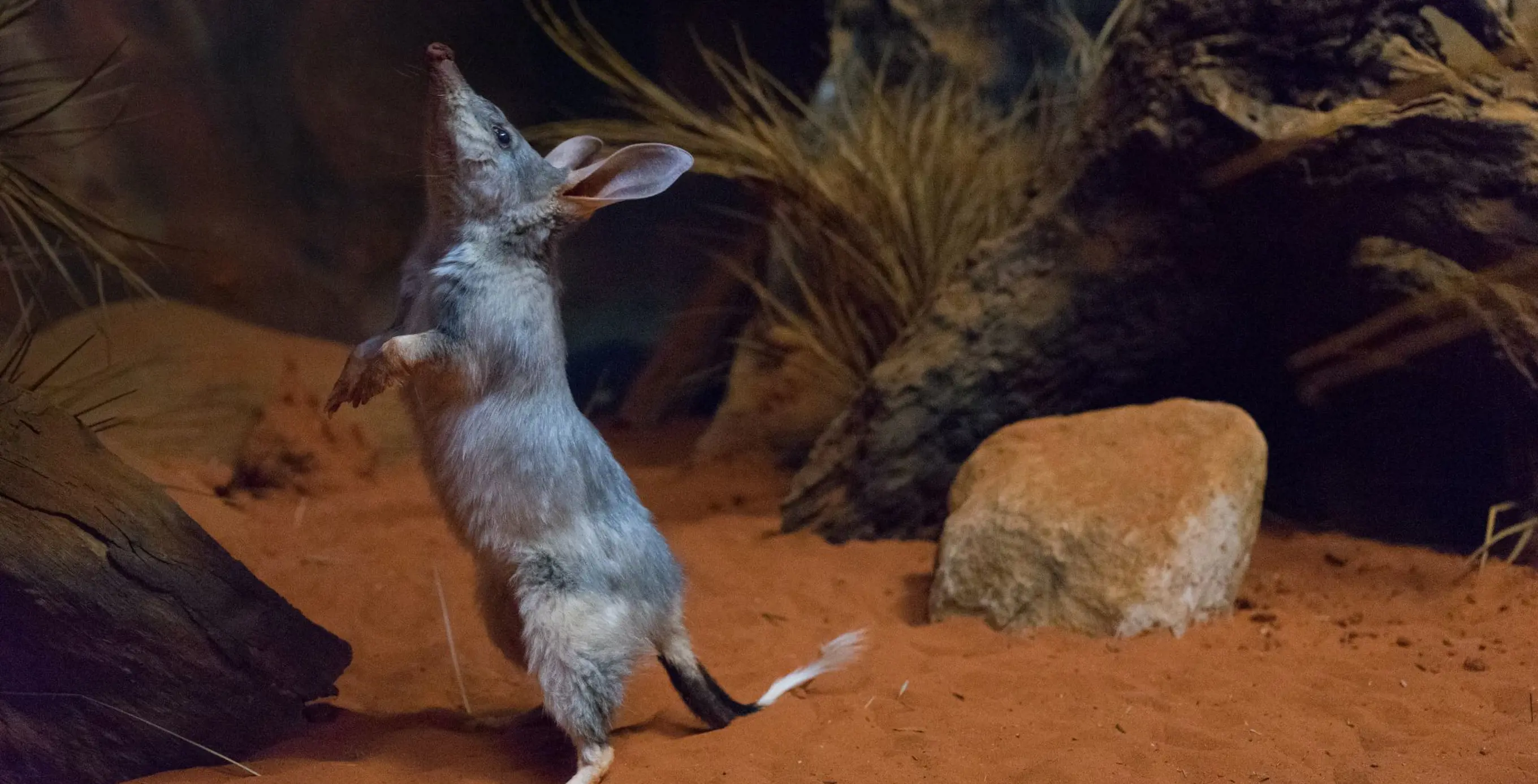
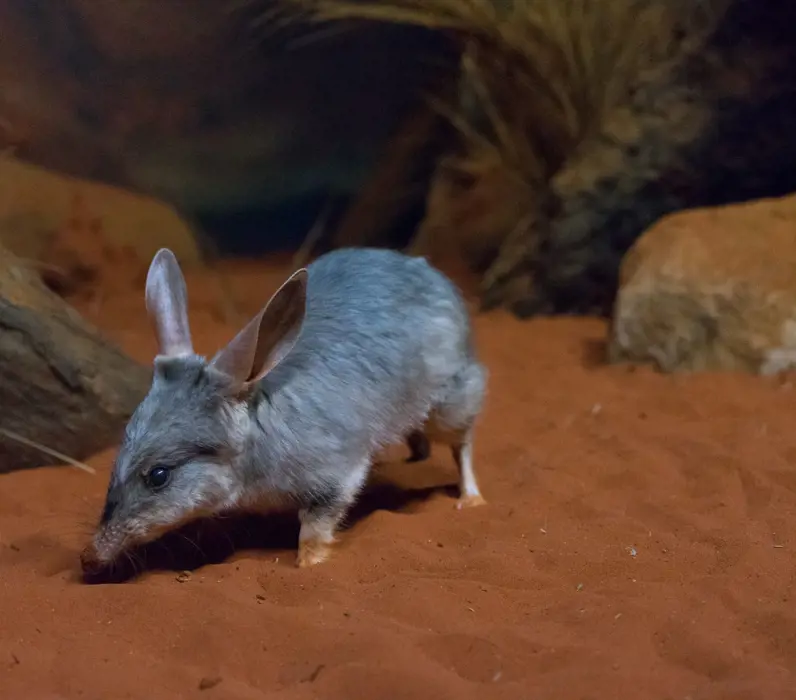
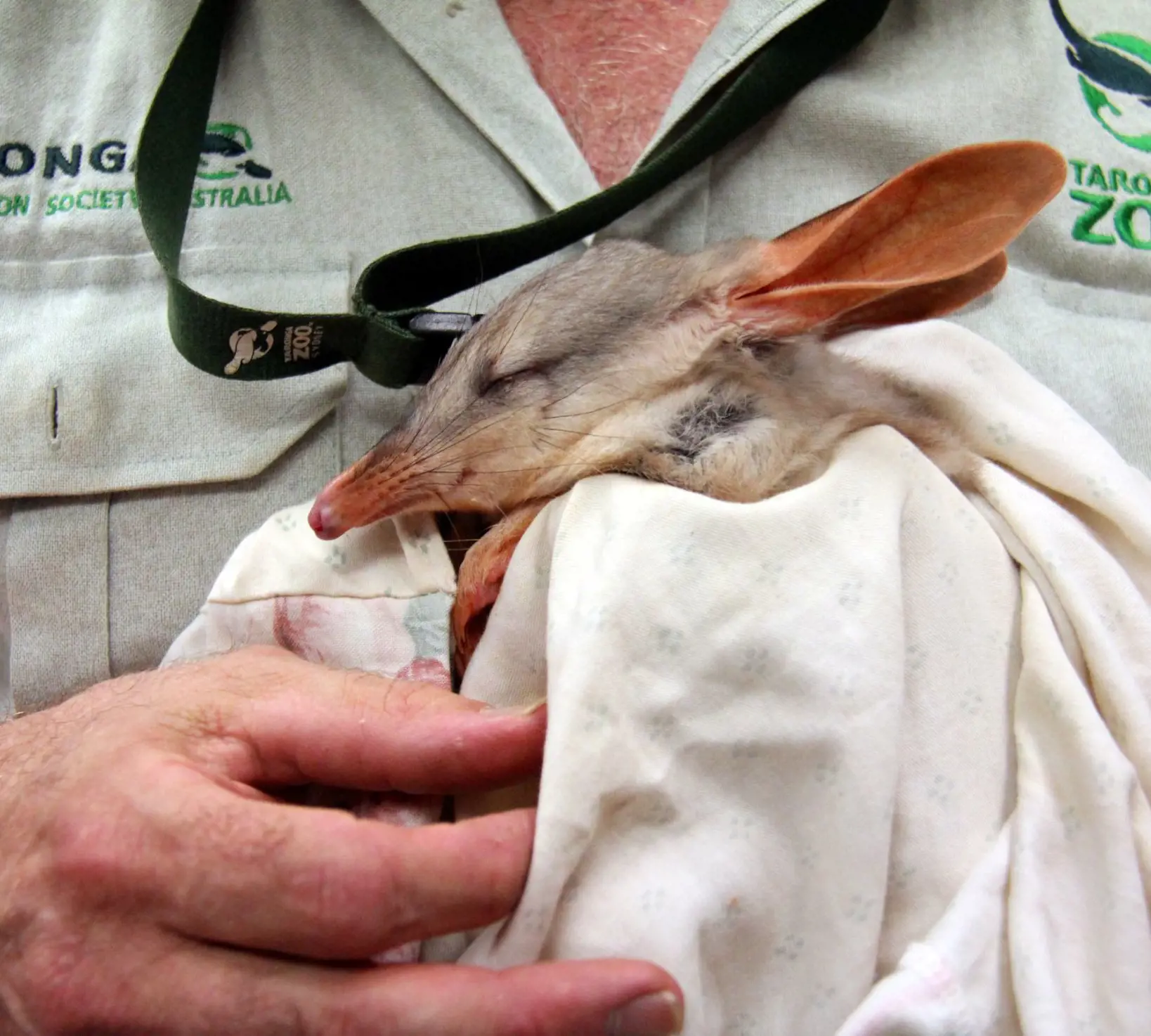
Bilbies (Bilbi in First Language - Wiradjuri) are the largest species in the bandicoot family and have beautiful fluffy, silky grey fur and a long snout with a slender tongue.
Sydney
Visitor tips for Sydney
See our group of Bilbies at nguwing nura.
10.30 am - 2.30 pm
Good times to visit
Fun facts about Greater Bilbies
Where they're found
They're found in the Tanami desert in the Northern Territory, the Great Sandy Desert, Pilbara and Kimberley regions of Western Australia.

10yrs
They live between 5-6 years in the wild and up to 10 years in human care.
What they eat
They're omnivores - they eat bulbs, seeds, fungi, insects & small lizards.

55cm
They can be up to 55cm tall.
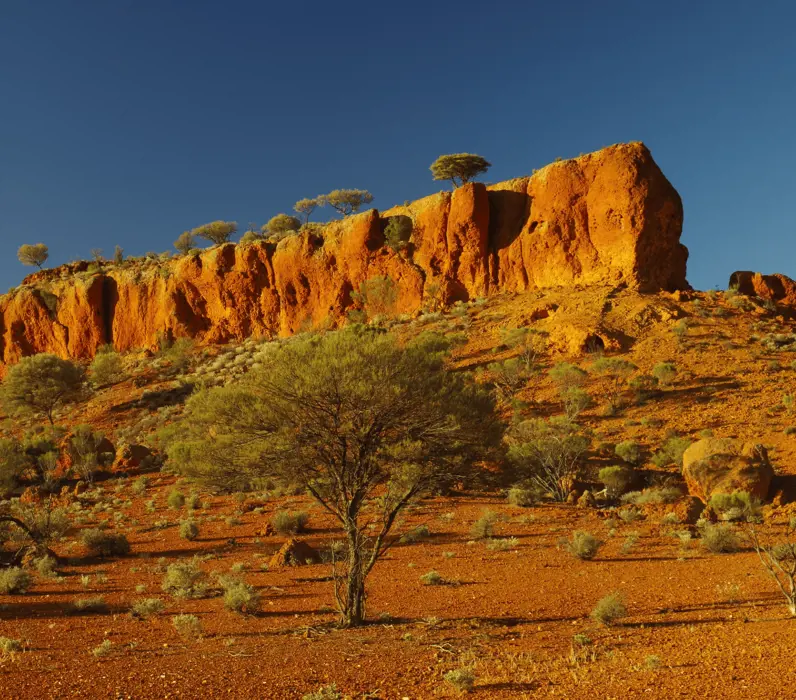
Where they live
Arid rocky soils with little ground cover to semi-arid scrublands and woodlands

2.5kg
They're small! They only weigh around 2.5kg.
12-16 days
Their gestation is only 12-16 days. That's like being pregnant for 2 weeks!
Where they're found
They're found in the Tanami desert in the Northern Territory, the Great Sandy Desert, Pilbara and Kimberley regions of Western Australia.
10yrs
They live between 5-6 years in the wild and up to 10 years in human care.
What they eat
They're omnivores - they eat bulbs, seeds, fungi, insects & small lizards.
55cm
They can be up to 55cm tall.
Where they live
Arid rocky soils with little ground cover to semi-arid scrublands and woodlands
2.5kg
They're small! They only weigh around 2.5kg.
12-16 days
Their gestation is only 12-16 days. That's like being pregnant for 2 weeks!
Did you know?
We bet you didn't know these facts about the Greater Bilby.

Scroll across and tap the icon to reveal bilby facts.
Great big Bilby
Bilbies are the largest species in the bandicoot family.
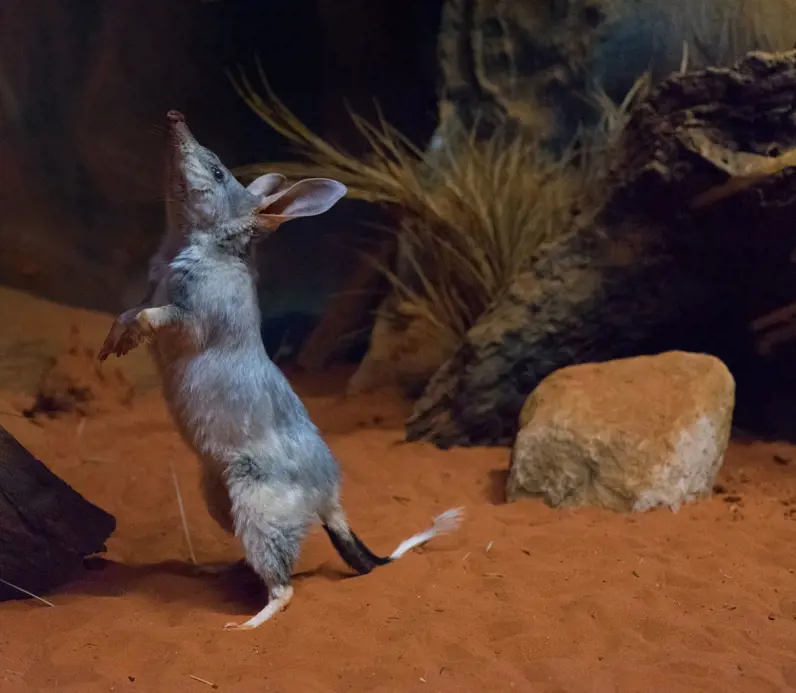
Have you heard?
They've got long ears! Their ears let heat escape, and give them amazing hearing.
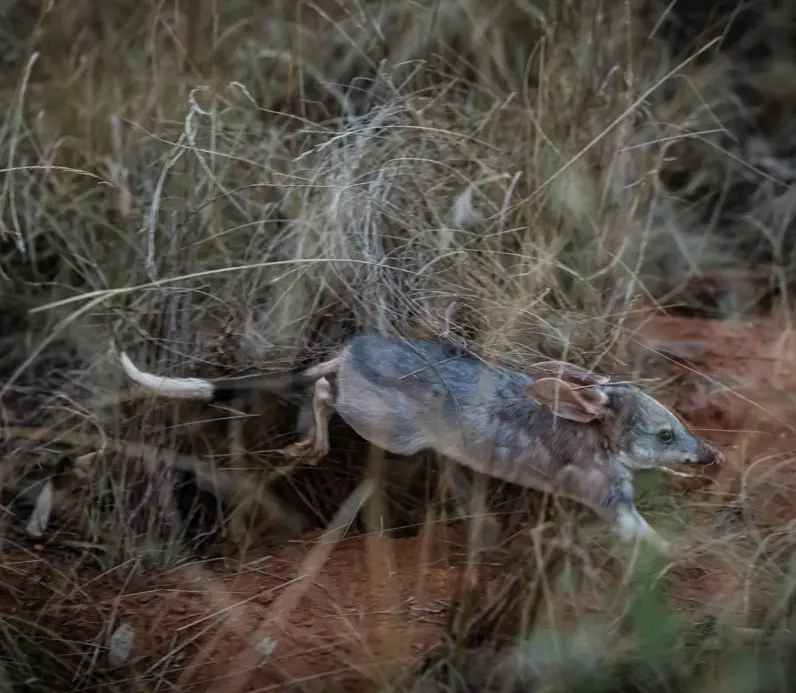
A backwards pouch
Bilbies have a backwards pouch so that when they dig, they don’t get sand in it.
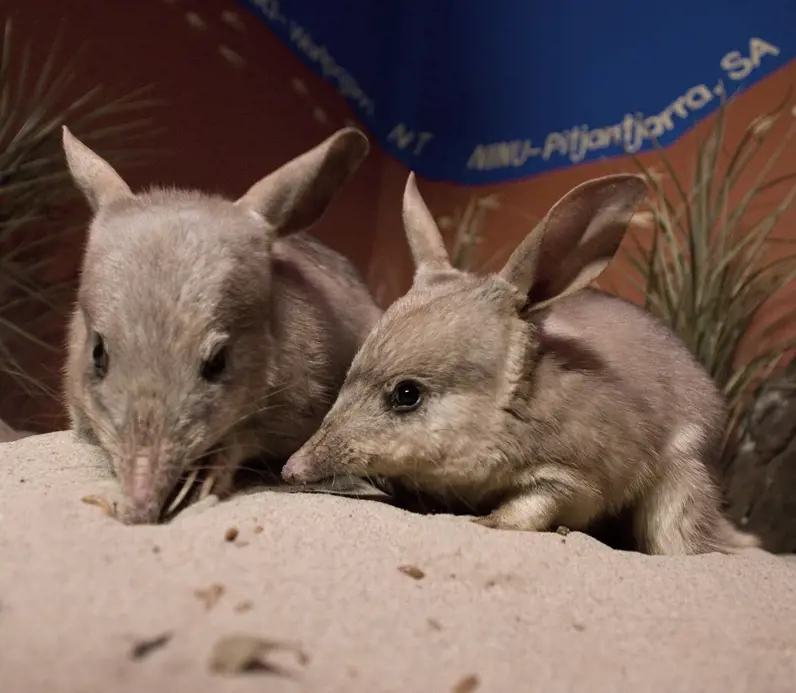
Conservation status (IUCN)
Vulnerable
Saving bilbies
We are committed to returning bilbies to NSW and supporting their recovery nationally. Their future is looking brighter thanks to the establishment of a free ranging population of bilbies within a 110ha feral predator free Sanctuary at Taronga Western Plains Zoo in Dubbo.
In 2020, ten bilbies bred in Dubbo were released into Sturt National Park in north-eastern NSW as part of the UNSW Wild Deserts program. This reintroduction comes more than 100 years after the bilby was declared extinct in NSW. This population has boomed to 60 individuals as of early 2022. In June 2022, 32 bilbies were translocated from the Taronga Western Plains Zoo Sanctuary into the Australian Wildlife Conservancy’s Newhaven Wildlife Sanctuary in Central NT.
Taronga is continuing to breed bilbies in our Sanctuary to support reintroduction and conservation efforts across Australia.
In 2020, ten bilbies bred in Dubbo were released into Sturt National Park in north-eastern NSW as part of the UNSW Wild Deserts program. This reintroduction comes more than 100 years after the bilby was declared extinct in NSW. This population has boomed to 60 individuals as of early 2022. In June 2022, 32 bilbies were translocated from the Taronga Western Plains Zoo Sanctuary into the Australian Wildlife Conservancy’s Newhaven Wildlife Sanctuary in Central NT.
Taronga is continuing to breed bilbies in our Sanctuary to support reintroduction and conservation efforts across Australia.
Species management programs
Taronga contributes to an Australasian Species Management Program and/or international breeding program for this species. This helps maintain healthy and resilient zoo-based animal populations by preserving genetic diversity, supporting animal husbandry knowledge, and ensuring exceptional animal welfare, safeguarding the species for the future.
Conservation stats
The Taronga Sanctuary at Taronga Western Plains Zoo is an open space for bilbies to thrive and exhibit natural behaviours.

120+
bilbies flourishing in Taronga Western Plains Zoo's Sanctuary.

10
bilbies bred at Taronga released into the Sturt National Park in 2020.

32
bilbies translocated into the Australian Wildlife Conservancy's Nehaven Wildlife Sanctuary in Central Northern Territory.
120+
bilbies flourishing in Taronga Western Plains Zoo's Sanctuary.
10
bilbies bred at Taronga released into the Sturt National Park in 2020.
32
bilbies translocated into the Australian Wildlife Conservancy's Nehaven Wildlife Sanctuary in Central Northern Territory.
Greater Bilby deep dive
Adopt a Bilby
Adopting a Greater Bilby helps protect this endangered Australian icon and supports vital conservation work.
Fact sheets for kids
Discover educational resources for kindergarten to year 6.